
Capture without losing context
Every saved item keeps the passage you selected, the text around it, and a link back to where it came from. For Zhihu, that also includes the question and the author.
Weave scattered information into knowledge.
LearnWeave is a personal knowledge learning workbench for Windows. Capture a passage from what you read, let AI turn it into knowledge with the source attached, then answer questions about it and review it until it sticks.
Collect → Distill → Connect → Understand → Test → Review
Local-first. Bring your own AI provider (OpenAI, Anthropic, Gemini, or any OpenAI-compatible API). Windows 10/11 · v1.4.0 · The app interface is currently in Chinese.
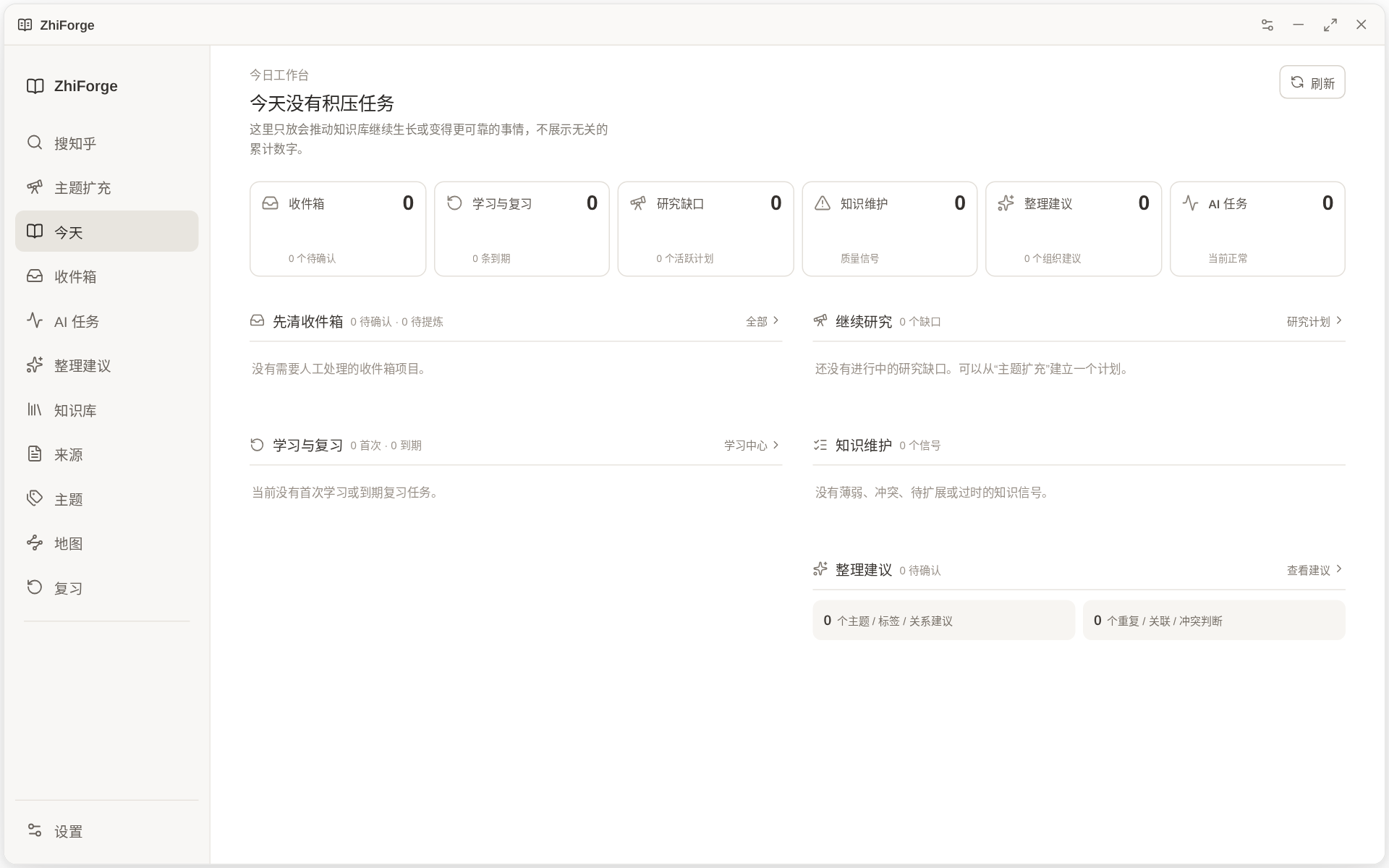
Screens from the current build (v1.4.0). They show a fresh, empty library, so there is no sample content. The app UI is in Chinese and still carries the previous name, ZhiForge.
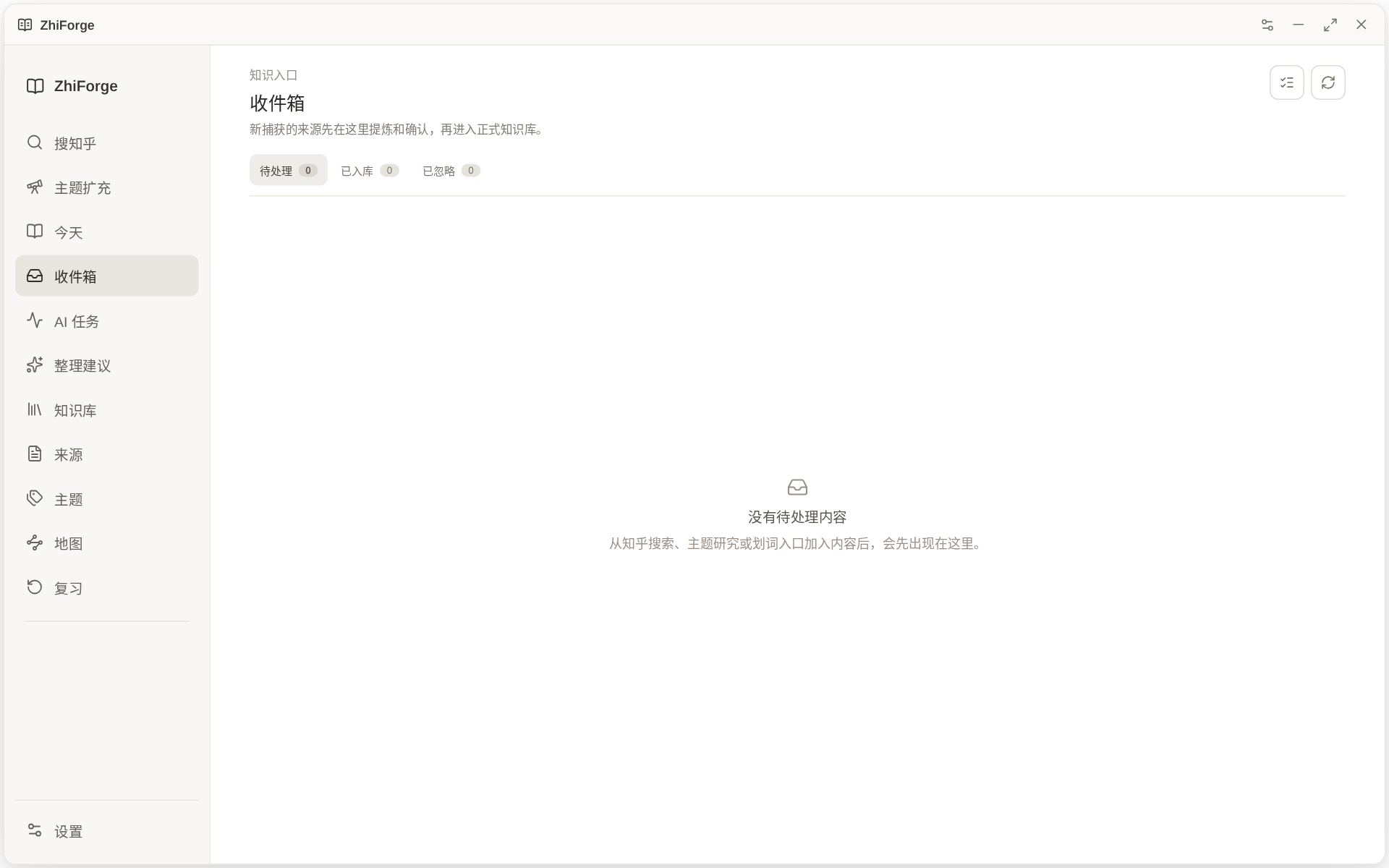
New captures land in the Inbox. You check what the AI pulled out before anything goes into your library.
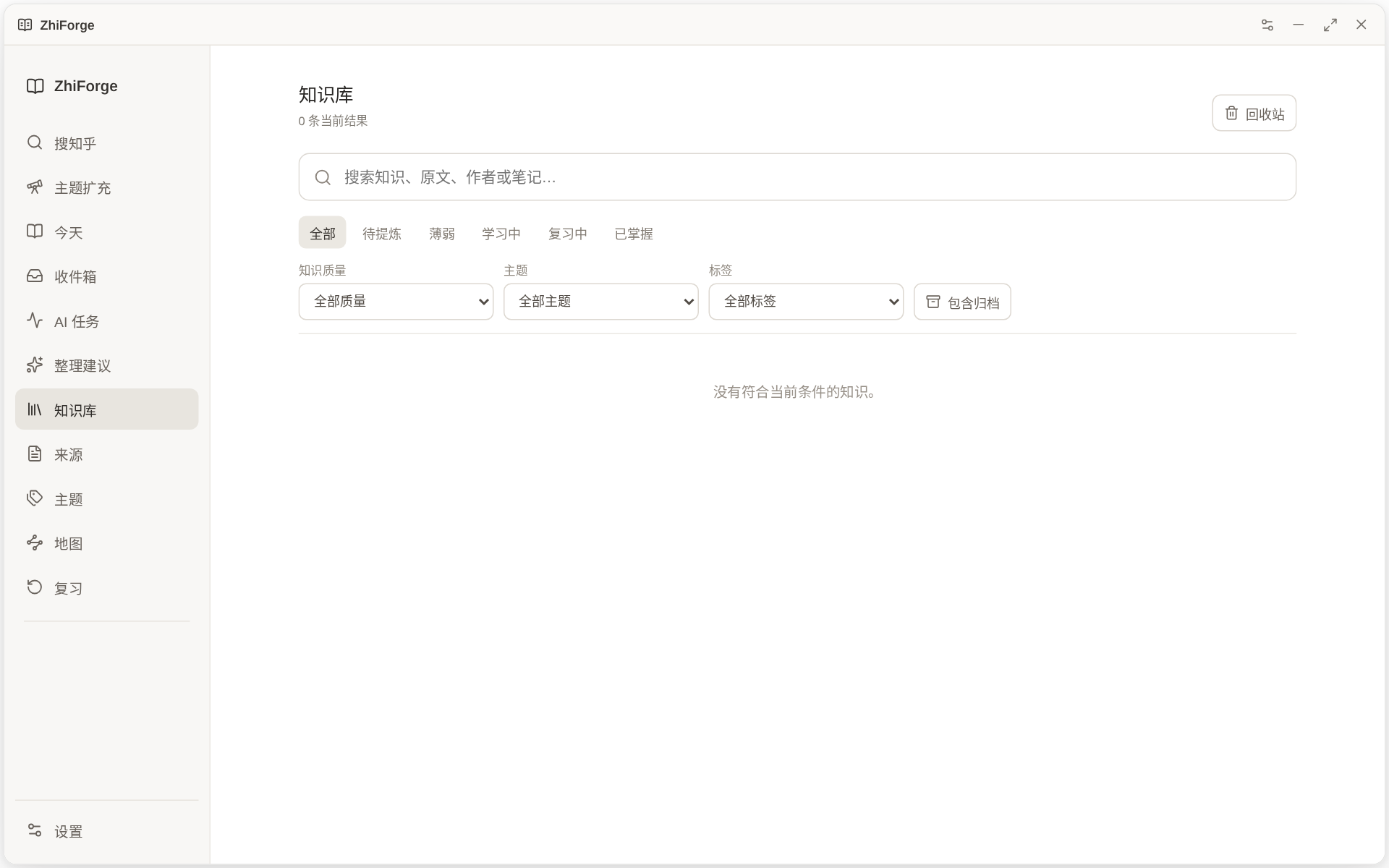
The knowledge library can be filtered by learning state (weak, learning, reviewing, mastered) and by quality (unverified, needs expansion, conflicting).
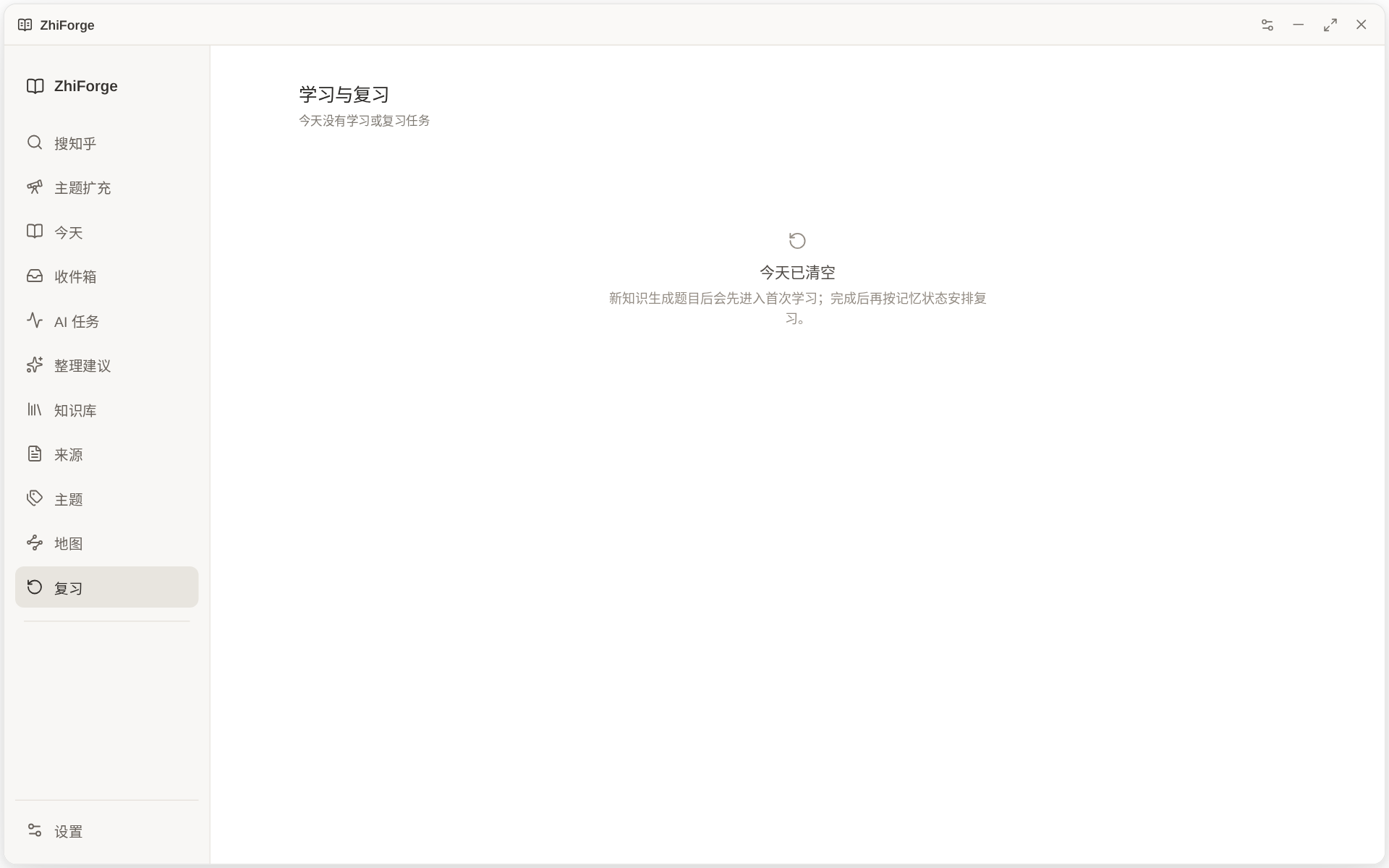
Learning and review shows only what's due. New knowledge gets a first study session, and later reviews follow how well you remembered it.
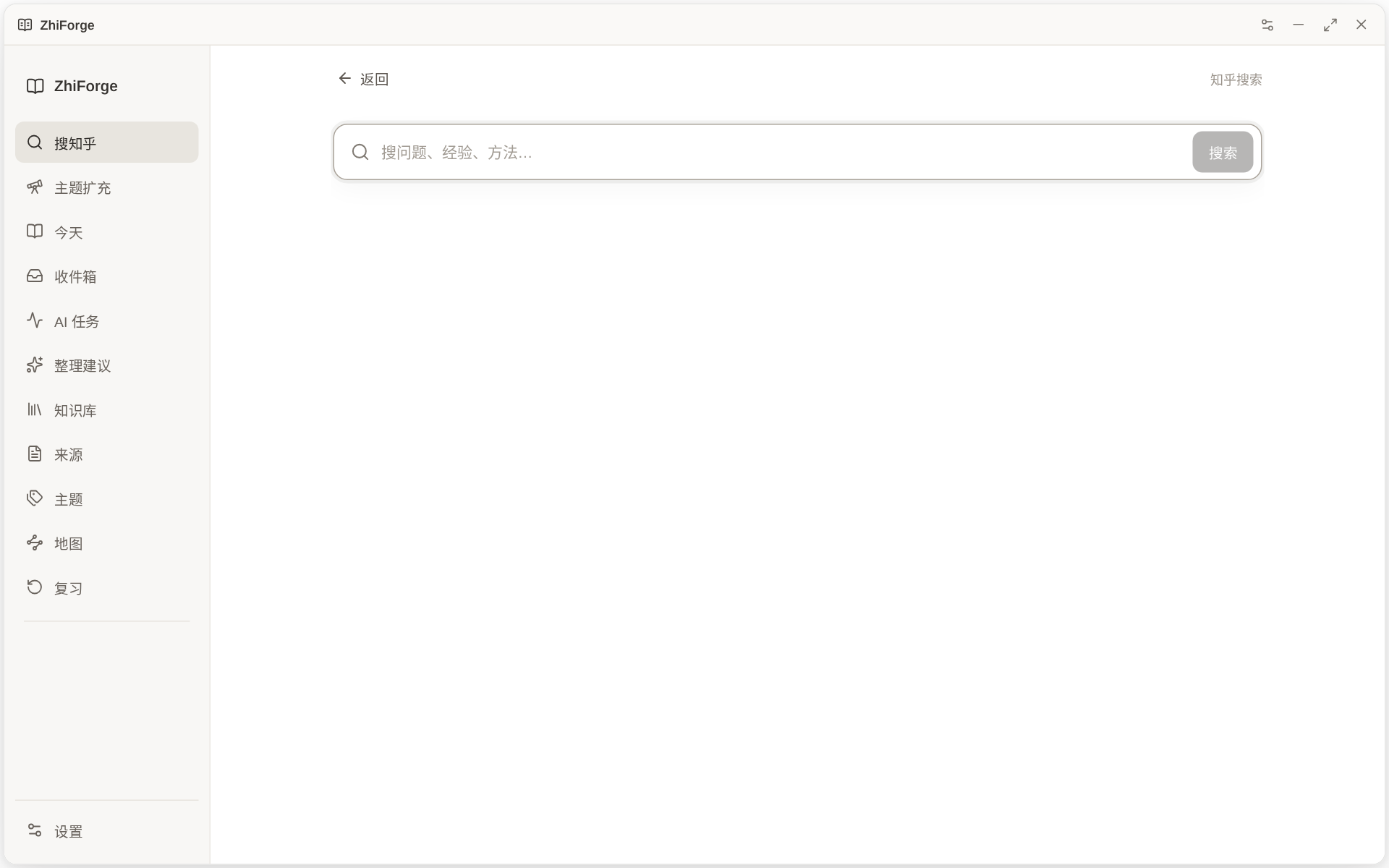
You can search Zhihu and read answers inside the app, then save a passage straight from the reader. This needs a Zhihu Open Platform key.
Select text in any Windows app and a small toolbar appears. Save the passage to learn it, or just translate, explain or polish it where you are; those one-off actions stay out of your library. Zhihu answers can also be searched and read inside the app.
Your AI model pulls the key ideas out of the passage. The original text and its source link stay attached, so you can always check the original.
Captures wait in the Inbox until you confirm them. They then join your knowledge library, where you can sort them by topic, find related or duplicate items, and see how they connect on a map.
LearnWeave asks questions about recall, explanation and application. You answer in your own words, and the feedback shows what you got right, what you missed, and the exact passage it's based on.
Your progress is tracked for each item. Weak or due items come back on a schedule, so you don't have to manage a study list.
Information is not knowledge. LearnWeave is built around one loop: source evidence → your own understanding → active recall → AI judgement → correction → spaced review. It is not a note-taking app.
Every saved item keeps the passage you selected, the text around it, and a link back to where it came from. For Zhihu, that also includes the question and the author.
A highlight becomes a structured knowledge entry with its evidence attached. You review it before it goes into your library, and it can be organized, merged and linked to related ideas.
Questions you answer in your own words, feedback based on the source, and reviews of weak or due items help you remember what you read instead of just collecting it.
LearnWeave is actively developed as an independent software project. The source code is public on GitHub.
LearnWeave was previously released as ZhiForge. The GitHub repository and release files still use that name.
Planned · not available yet
Today, structured sources come from desktop text selection and the built-in Zhihu search. The plan is to make Zhihu one source among many. None of the following is shipped yet:
LearnWeave Labs is an independent software studio focused on building thoughtful AI-powered knowledge and learning tools. LearnWeave is currently the studio's primary product.
Questions, feedback, or commercial licensing inquiries: